Categories
Members News

JOLLIBEE GROUP FOUNDATION REINFORCES SUPPORT TO SMALLHOLDER FARMERS THROUGH AGRI-TECHNOLOGY

Jollibee Group Foundation (JGF) continues to support smallholder farmers by providing them access to technologically advanced farming techniques for more sustainable agriculture.

“Improving smallholder farmers’ knowledge and capacity for greater productivity and profit will redound to the continued growth of our agricultural sector,” said Gisela Tiongson, JGF Executive Director.

Launched in 2008, JGF’s Farmers Entrepreneurship Program (FEP) empowers and helps smallholder farmers sharpen their technical and business acumen, as well as partnership-building skills. Today, these farmers supply the vegetable requirements used in some Jollibee, Chowking, Greenwich, and Mang Inasal favorites.

“By becoming more adept and qualified to participate directly in the value chains of food companies, small producers get assured of a regular market, resulting in their increased and steady income,” Tiongson added. To reinforce support to smallholder farmers, JGF has adopted public-private partnerships to help farmers gain access to agricultural technologies that increase their yield, reduce farming costs, and make them more competitive in the market.

Weather data, farmer efficiency
Since 2020, the Foundation has partnered with IBM’s The Weather Company for a more accurate community-level, 7-day weather forecast. JGF also worked with the Central Luzon State University to interpret the weather data and translate it into the prescribed farm practice for the day. The information is then shared in a private messaging group for faster dissemination among the farmers. The SMS feature of this system is now being developed for easier access.

The Onion and Vegetable Producers Cooperative (OVEPCO) farmers from Barangay Tabulac in San Jose City, Nueva Ecija were among the first to benefit from this system. Through the barangay-level forecasts provided, the farmers can adapt and better decide when to plant, fertilize, and harvest their crops.

“It has been helpful. Now we can prepare for what will happen tomorrow. It has become a guide for our daily farming,” shared Eddie Soriano, OVEPCO Chairman.

This project currently supports 116 farmers in 12 barangays in San Jose City, Nueva Ecija and Alcala, Pangasinan.

Healthy soil, healthy production
In partnership with the Department of Agriculture’s Bureau of Soils and Water Management, JGF ventured into studying soil samples and providing practical recommendations to make the soil healthier and more viable for greater yield.

To help farmers improve their crops, JGF worked with the PUM Netherlands Senior Experts, various seed companies, and Jollibee Group’s own Research and Development team to find appropriate onion and bell pepper varieties that will meet the company’s requirement, and which can be more easily produced by the farmers.

Together with the Southeast Asian Regional Center for Graduate Study and Research in Agriculture, JGF is also looking into further increasing the productivity of onion farms. Called “Project SAYA” or Strengthening Agricultural Yield of Allium Cepa L. (Onion) in the Philippines, the project aims to help increase onion production by addressing inefficiencies, gaps, and factors affecting the level of production; as well as to identify potential and suitable areas for expansion.

“These agri-technology efforts are creating a ripple effect of empowerment and opportunities among our partner farming communities and institutions. They have reported greater knowledge on farming techniques, increased yield and income, and the confidence to transact with market players,” said Tiongson. “JGF will sustain these efforts so that farmer entrepreneurs can continue to gain greater pride in their profession and to reap the benefits of sustainable agriculture.”

Since 2019, the PUM Netherlands Senior Experts have guided farmers in soil testing and given them advice on soil health. They have also been assisting in varietal trials to test for better crop varieties, and introduce mechanization to improve productivity.
Categories
Members News

Security Bank Foundation equips 17 Central Luzon schools with educational resources

Security Bank Foundation, Inc. (SBFI), Security Bank’s Corporate Social Responsibility (CSR) arm, equipped 17 public schools in Central Luzon with portable media libraries and keychain microscopes to expand learning opportunities of students in the area. 

SBFI turned over the educational resources on July 12 during a ceremony at Angeles City National High School in Pampanga. The 17 public schools received one portable media library which is an external hard drive containing over 1,500 Knowledge Channel developed video lessons, e-games, and e-session guides aligned with the Department of Education K-12 curriculum.

Three of the 17 public schools, which are national high schools, received an additional 244 keychain microscope sets called Makeroscopes, invented by Filipino engineer Jeremy De Leon. The tool is attached to a mobile device front camera to enable the viewing of microscopic samples up to x265 zoom. Each set also comes with sample slides of animal and plant cells.

“Learning resources play a vital role in the improvement of the quality of education in the region. Many studies show that those who have better resources often perform better. We thank Security Bank Foundation for recognizing this need and helping Region III address these gaps through their generous donation,’ says Dr. May Eclar, Department of Education Region III Director who led the acceptance of the donated educational resources by SBFI.

The recipient schools were beneficiary schools of SBFI’s Build a School, Build a Nation Program, the foundation’s flagship program which aims to improve the quality of basic education in the Philippines through building of classrooms in communities where Security Bank has presence while supplementing the infrastructure donation with major repair support, training for teachers and principals, and other learner support interventions.

The schools that received portable media libraries were; Angeles City National High School (Angeles, Pampanga), Banga High School (Plaridel, Bulacan), Bataan National High School (Balanga, Bataan), Calulut Integrated School (San Fernando, Pampanga), Calvario Elementary School (Meycauayan, Bulacan), Cong. Erasmo R. Cruz Memorial Central School (Bocaue, Bulacan), Gordon Heights I Elementary School (Olongapo, Zambales), Guyong Elementary School (Sta. Maria, Bulacan), Josefa V. Ycasiano Memorial School (Baliuag, Bulacan), Malhacan Integrated School (Meycauayan, Bulacan), Olongapo City National High School (Olongapo, Zambales), Sabang Elementary School (Baliuag, Bulacan), San Jose Elementary School (Tarlac City), San Juan Bautista Elementary School (Tarlac City), San Vicente Elementary School (Cabiao, Nueva Ecija), Sta. Rita Elementary School (Cabiao, Nueva Ecija), and Tikay Elementary School (Malolos, Bulacan). The schools that received the keychain microscopes were Angeles City National High School, Bataan National High School, and Olongapo City National High School.

Categories
LCF News

Vivant Foundation partnered with Manila Water Foundation to support the Department of Education’s WASH in Schools (WinS) program through the League of Corporate Foundations (LCF) WinS: Lingap Eskwela sa Pandemya

When the pandemic broke out in 2020, learners were left at home, teachers were forced to adapt to distance learning, as the world waited for face-to-face classes to resume. For schools in remote areas such as Busuanga Island in Palawan, or Bantayan, Cebu, access to hygiene facilities is among the necessities that will ensure pupils are protected against communicable diseases when they return to school. 

With this, Vivant Foundation saw the need to help public school teachers and learners in far-flung communities adapt to the new normal. This includes supporting DepEd’s learning continuity plan amidst the COVID-19 pandemic by strengthening water access, sanitation, and hygiene (WASH) in schools. With this, Vivant Foundation partnered with Manila Water Foundation to support the Department of Education’s WASH in Schools (WinS) program through the League of Corporate Foundations (LCF) WinS: Lingap Eskwela sa Pandemya.  

 
Through the partnership with Vivant Foundation, 10 schools in Palawan, Cebu, and La Union were provided with 10-faucet pedal-operated hygiene facilities benefiting more than 5,000 students, teachers, and staff, upgrading the WinS star-rating of these schools to 1-star in the hygiene facility indicator of DepEd’s Three Star Approach.

Through the partnership with Vivant Foundation, 10 schools were provided with 10-faucet pedal-operated hygiene facilities benefiting more than 5,000 students, teachers, and staff, upgrading the WinS star-rating of these schools to 1-star in the hygiene facility indicator of DepEd’s Three Star Approach. 

In Palawan, four schools benefitted from the project, namely Sta. Monica Elementary School in Coron, Busuanga Elementary School in Old Busuanga, Malaking Patag Elementary School in Malaking Patag in Culion, and Sta. Lourdes National High School in Puerto Princesa City. In Cebu, hygiene facilities were installed in Kabangbang Central Elementary School in Bantayan, Tayud Elementary School in Tayud, Liloan, and Buagsong Elementary School in Buagsong, Cordova. While in La Union, the facilities were installed at schools in the municipality of Bauang: Payocpoc Elementary School, Santiago Elementary School, and Guerrero Elementary School. 

“Our handwashing facility is very important to our school. Teachers and learners wash their hands in our handwashing facility before entering their respective classrooms. Since it is a group handwashing facility, it can accommodate 10 learners at the same time. It is really a big help in our school. That is why our school is very thankful to our benefactor, Vivant, for giving us this special project,” said Darlene Calica, Principal of Guerrero Elementary School, La Union. 

In his speech during the turnover ceremony in Puerto Princesa, Vivant Foundation CEO Shem Garcia expressed the importance of partnerships in the delivery of successful social development programs. “This partnership shows how important relationships really are to Vivant as a company,” Garcia said. “By working together, with organizations like the League of Corporate Foundations, we’re able to do more. Thank you to the LCF for creating that community among foundations where we’ve learned and grown,” he added. 

The hygiene facilities are designed to respond to COVID-19 challenges, hence, include pedal-operated, properly distanced faucets one meter apart, to ensure physical distancing during group handwashing and facilitate the behavior of contactless handwashing. Each is equipped with a soap dish, to promote handwashing with soap, and with signages on the steps to proper handwashing, toothbrushing, and COVID-19 precautionary measures.  

“As an organization with the core advocacy of WASH or water access, sanitation, and hygiene, Manila Water Foundation is grateful to be the implementing partner of the League of Corporate Foundations on the LCFWinS Program. This is indeed a demonstration of our collective effort and impact – working together to create the enabling environment and the right conditions for good hand hygiene in schools, for our learners and teachers,” said MWF Executive Director Reginald Andal.   

Overall, #LCFWinS has benefited 147,029 individuals, 5,893 of which benefited through the partnership with Vivant Foundation, covering 10 schools in Palawan, Cebu, and La Union, implemented from May 2021 to March 2022. 

Through the LCFWinS, Vivant Foundation  funded the construction of 10 units of 10-faucet hygiene facilities in 10 schools in Palawan, Cebu, and La Union from August 2021 to March 2022.  

***

LCFWinS is a collaboration among corporations and corporate foundations in support of the WASH in Schools program of the Department of Education. It also supports the Basic Education Learning Continuity Plan of the Department at this time of the Pandemic. LCFWinS is aligned with one of the League of Corporate Foundations’ strategic pillars - Collective Impact, which is the network’s ability to convene, participate, collaborate, and build partnerships among its members and other stakeholders toward addressing gaps in social development.  

Categories
LCF News

LCF – DLSU ink MOA to develop a CSR Diploma Course

May 17, 2022 was a momentous day for the League of Corporate Foundations’ CSR Institute.

Two organizations from different sectors – business and academe – are collaborating to better equip and further enhance the business sector’s Corporate Social Responsibility efforts and the people who lead them.

The League of Corporate Foundations and the DLSU – School of Lifelong Learning (SoLL) signed a Memorandum of Agreement that binds them to develop and offer a 3-unit diploma course on CSR and Environmental, Social, and Governance (ESG) principles, as well as training workshops. Held at the LCF Boardroom on May 17, the MoA signing also marked the first in-person event to be held at the LCF office since the COVID-19 pandemic began in March 2020.

In attendance at the event were the five members of the LCF Board of Trustees, led by its Chair, Mr. Sebastian Quiniones, Jr. who signed the MoA on behalf of LCF.

Both Mr. Quiniones and Dr. Benito Teehankee of DLSU emphasized the important role that businesses play in helping the country grow economically even as civil society organizations help bridge the gap in social service delivery by assisting marginalized communities, which the government cannot do on its own. Mr. Quiniones also said that while training workshops build the capacities of corporate foundation staff, there is still so much that academic courses, such as the one to be developed through this partnership, can teach.

Also present were the six prospective faculty members from the CSRI’s own Speakers Bureau: Maria Pamela Castro from Pilipinas Shell Foundation, Inc., Jeffrey Tarayao from One Meralco Foundation, Paulino Buenconsejo from LCF, Cristina Arceo-Dumlao from the Philippine Daily Inquirer, Julianna Encarnado from Converge ICT Solutions Inc., and Alma Mapili from Winrock International.

Other LCF Trustees present were Ms. Maricar Angeles, Mr. Geoffrey Garcia, Mr. Shem Jose Garcia, and Mr. Austere Panadero. Signing the MoA on behalf of DLSU-SoLL were Dr. Benito Teehankee, Professor of Business Ethics, and Dr. Rodiel Ferrer, Dean of SoLL.

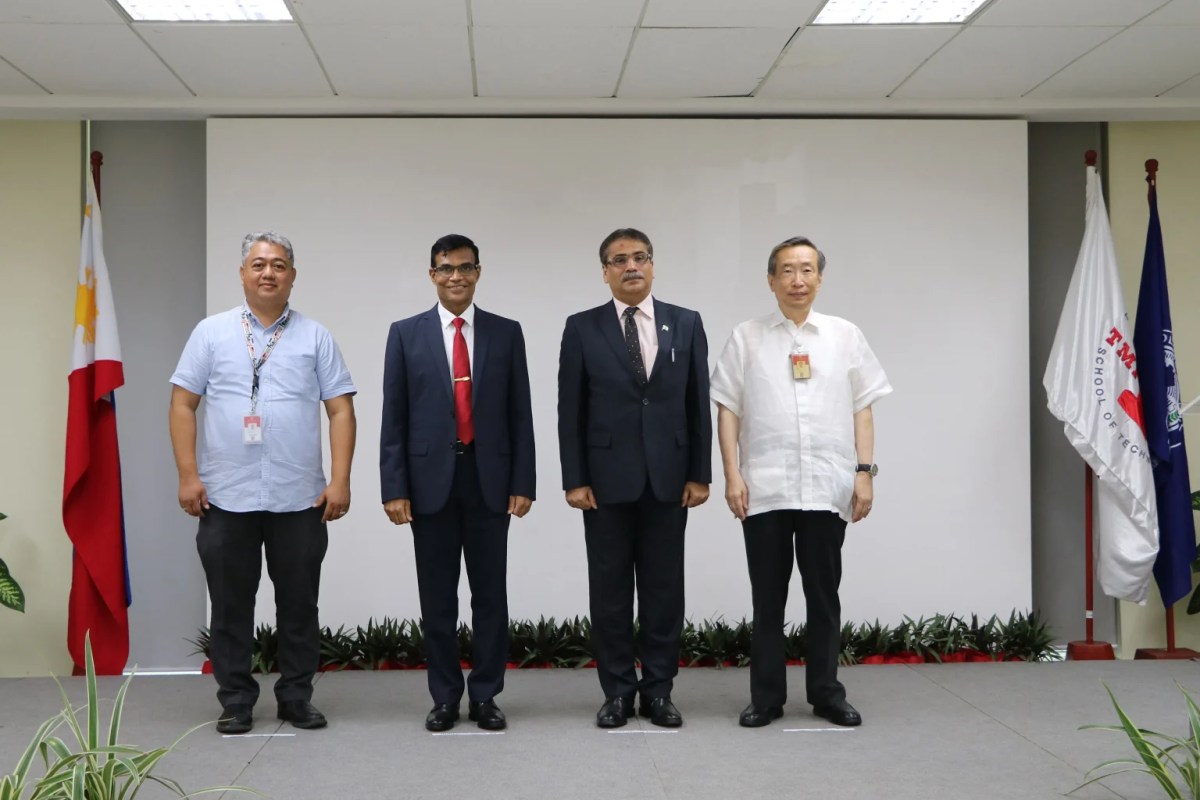
From Left to Right: Mr. Max Ventura, ESG Consultant of AIA Philippines, Mr. Shem Garcia, Executive Director of Vivant Foundation, Inc, Mr. Sebastian Quiniones Jr., LCF Chairperson and Executive Director of Pilipinas Shell Foundation, Inc.DLSU – School of Lifelong Learning, Dr. Rodiel Ferrer from DLSU‒SoLL, Ms. Marie Angeles, LCF Board Secretary and Executive Director of Ronald McDonald House Charities, and Mr. Geoffrey Gabriel Garcia, LCF Trustee and Executive Director of Pfizer Philippines Foundation
Categories
Uncategorized

Aboitiz Foundation builds hygiene facilities in support of DepEd’s WASH in Schools

With the resumption of face-to-face classes in areas with low COVID-19 alert levels, the presence of new hygiene facilities provides a sense of security for parents and teachers that learners can be still protected through proper handwashing from communicable diseases while in school.

This is the goal in mind when Aboitiz Foundation partnered with Manila Water Foundation to support the Department of Education’s WASH in Schools (WinS) program through the League of Corporate Foundations (LCF) WinS: Lingap Eskwela sa Pandemya.

Aboitiz Foundation, the corporate social responsibility arm of the Aboitiz Group together with its business units, joined the League of Corporate Foundations’ (LCF) call to support the WASH in Schools (WinS) program and Basic Education Learning Continuity Plan of the Department of Education through the synergy project LCFWinS: Lingap Eskwela sa Pandemya. Implemented by LCF-member Manila Water Foundation, Manila Water’s social development arm, the LCFWinS is designed to conduct WASH interventions that address the current COVID-19 challenges in schools.

Through the LCFWinS, Aboitiz Foundation and Aboitiz Group business units funded the construction of 10 units of 10-faucet hygiene facilities in 10 schools in Luzon, Visayas, and Mindanao from August 2021 to March 2022.

Through the LCFWinS, Aboitiz Foundation and Aboitiz Group business units funded the construction of 10 units of 10-faucet hygiene facilities in 10 schools in Luzon, Visayas, and Mindanao from August 2021 to March 2022.

Among the business units of Aboitiz Group that sponsored the facilities are Therma Luzon, Therma Visayas, AP Renewables, Davao Light and Power Company, Subic Enerzone, San Carlos Sun Power, and Lima Enerzone.

“As Aboitiz Foundation moves forward to its enhanced strategy of building resilient, empowered, and sustainable communities, joining a bigger initiative such as LCFWinS is a good venue to maximize our resources and create a long-term impact in both education and health sectors. We all take a significant part in making sure that our public schools become safe and resilient learning environments in the future. We thank the League of Corporate Foundations and Manila Water Foundation, for your commitment to making a long-term impact in the schools and the communities.” Aboitiz Foundation President and COO Maribeth Marasigan said.

The hygiene facilities are designed to respond to COVID-19 challenges, hence, included pedal-operated, properly distanced faucets one meter apart, to ensure physical distancing during group handwashing and facilitate the behavior of contactless handwashing. Each is equipped with a soap dish, to promote handwashing with soap, and with signages on the steps to proper handwashing, toothbrushing, and COVID-19 precautionary measures. Other interventions included the distribution of hygiene kits and IEC materials and the conduct of virtual hygiene education sessions.

“With the impact that this meaningful and sustainable project will provide, we commend Aboitiz Foundation and Aboitiz Group as they co-create resilient and empowered learning environment and build a kinder world for our learners and teachers in ten public elementary schools across the country. This is the positive energy we need during these times.” said MWF Executive Director Reginald Andal.

Under the LCFWinS, Aboitiz Foundation’s support of the LCFWinS project benefited more than 24,000 students, teachers, and staff, improving access to WASH facilities and the student-to-faucet ratio by 44%.

Under the LCFWinS, Aboitiz Foundation’s support of the LCFWinS project benefited more than 24,000 students, teachers, and staff, improving access to WASH facilities and the student-to-faucet ratio by 44%.

***

LCFWinS is a collaboration among corporations and corporate foundations in support of the WASH in Schools program of the Department of Education. It also supports the Basic Education Learning Continuity Plan of the Department at this time of the Pandemic.

LCFWinS is aligned with one of the League of Corporate Foundations’ strategic pillars – Collective Impact, which is the network’s ability to convene, participate, collaborate, and build partnerships among its members and other stakeholders toward addressing gaps in social development.

Categories
LCF News

Early Bird Registration Period extended until JUNE 15!!!

You too can create the future we need.

Join us at the 20th LCF CSR Expo “Creating the Future We Need: Striking a Path During a Period of Transition”.

🌏 Explore your future in sustainability

🌍 Meet and learn from professionals

🌎 Discover solutions to real world challenges

EARLY BIRD RATES EXTENDED TO JUNE 15!!

Special student and MSME rates are available! Register now: tinyurl.com/20thCSRExpo

#CreatingTheFutureWeNeed #20thLCFCSRExpo #CorporateSocialResponsibility

Categories
LCF News

Meet our Keynote Speaker for the 20th LCF CSR Expo and Conference

If we as leaders, directors, investors and simply human beings don’t see ourselves as stewards of the future, we are letting down our employees, our customers and our suppliers.

Watch CEO and Amazon best-selling author, Helle Bank Jorgensen, challenge the Philippines’ business sector to take actionable steps towards realizing the future we need. Her keynote will discuss the Environment, Social and Governance (ESG) best practices and frameworks used by world-leading companies and how we can take action today. She will be joined by two reactors from the energy sector to contextualize how ESG is practiced in the Philippines.

Ms. Jorgensen is the CEO and co-founder of Competent Boards, the original and premier creator of online ESG and Climate training programs for board directors and senior business professionals. Apart from other several achievements and contributions to nurturing sustainable business practices around the world, she was also given the Global Impact Award and named one of “5 people in ESG to look out for” in 2020.

Don’t miss our opening Keynote Speaker!

Register now: tinyurl.com/20thCSRExpo

#CreatingTheFutureWeNeed #20thLCFCSRExpo #CorporateSocialResponsibility #ESG #HelleBankJorgensen

Categories
LCF News

Registration for the 20th LCF CSR Expo and Conference is now OPEN!

With the state of the world, the future is uncertain—but not set in stone.

We still have a chance to influence the outcomes of today for the benefit of tomorrow. The League of Corporate Foundations invites you to the 20th LCF CSR Expo “Creating the Future We Need: Striking a Path During a Period of Transition”.

✅ Learn from leaders and gamechangers in CSR.

✅ Get to know foundations and their sustainable initiatives that shape the country.

✅ Find empowerment by engaging with like-minded professionals.

✅ Be part of a movement that impacts and influences the community.

📝 Early bird registration until May 31

📝 Regular registration: June 1-31

📝 Onsite regular registration: July 1-7

Register now: tinyurl.com/20thCSRExpo

#CreatingTheFutureWeNeed #20thLCFCSRExpo #CorporateSocialResponsibility

Categories
LCF News

2020 LCF CSR Guild Awards Outstanding CSR Projects

Winners:

A. Program Category

1.Outstanding CSR Project in Education: Hyundai Dream Centre-Philippines (HARI Foundation, Inc.)

Date Started: April 10, 2018

Location: Calamba City, Laguna

Status: Operating

Objective: To train underprivileged young men and women in Hyundai vehicle repair and maintenance and eventual employment at Hyundai dealerships in the country

Description: HDCP is a world-class automotive training and education hub established by HARI in partnership with Hyundai Motor Company (HMC) and humanitarian organization Plan International. 1 HDCP is the fifth dream center that HMC has set up in the Asia-African region since 2013. HARI is the first Hyundai distributor to be tapped to craft Dream Centre training programs that respond to local industry needs. HDCP training programs are made up of three TESDA-certified training courses. HDCP graduates are employed as automotive technicians, service advisors, and warranty officers by Hyundai dealerships.

Scope/Scale: HDCP scholars are referrals from Hyundai dealerships and Plan International program areas (Mindoro, Masbate, Cebu, Samar, Leyte, Cotabato, and Maguindanao). HDCP has produced 174 graduates from 4 batches. The fifth batch has 43 scholars in training. 87% of the graduates are employed at Hyundai dealerships across the country.

Partner Agencies: Hyundai Motor Company (HMC), Plan International, Technical Education and Skills Development Authority (TESDA), Sisters of Mary School

__________

2.Outstanding CSR Project in Enterprise Development: Baslay Coffee Program (Energy Development Corporation)

Kaingin” is a traditional yet destructive agricultural method that has unfortunately been a way of life for many Filipinos residing in mountainous regions of the Philippines. It is one of the biggest causes of deforestation and detrimental to natural resources such as geothermal steam from beneath the earth’s surface.

Unfortunately, not only does kaingin disrupt the natural ecosystem in the area and decimate endemic flora and fauna, but it also generates carbon dioxide emissions that contribute to climate change and global warming. While locals are able to eke out a living with kaingin, such method is not sustainable and renders a lot of harmful effects not only to the environment but also to their health and well-being.

In order to address this challenge, Energy Development Corporation (EDC) developed an innovative corporate social responsibility (CSR) and shared value initiative that sought to attain behavioral change and positive stakeholder engagement among the “kaingeros” who are residents of the communities it operates in, particularly in the foothills of Mount Talinis—the largest remaining forested area in Negros Oriental—within the area of Barangay Baslay in Dauin.

EDC thus came up with the Baslay Coffee Program. Identifying coffee beans as a proper and viable agricultural produce in the high-altitude locale, the project aims to provide alternative and more sustainable means of livelihood for the people of Baslay and surrounding communities, effectively transitioning them away from a culture and business practice of kaingin and ultimately transforming them into stewards of their province’s own natural resources.

EDC’s intervention leads to greater opportunities for Baslay farmers. In 1985, the then Philippine National Oil Company (PNOC) – EDC organized these kaingineros into Baslay Farmers Association (BFAs) as a community based farmers’ organization. As a result of the 30-year reforestation program of EDC in the area, BFA had 120 hectares of coffee plantations. Due to the shortage of supply and potential room for growth in the coffee industry, EDC decided to reinforce and strengthen the coffee farming practices of Baslay farmers while safeguarding the forests.

At present, aside from being a refuge to 113 species of birds, the forest in Baslay now offers quality coffee in Central Visayas. The BFA communally owns a dense, wild, completely organic coffee forest (mostly robusta and liberica) that yields luscious red fruit not only for our coffee mill but for bats, birds, civet cats, insects, and myriads of species. They are also caregivers and forest farmers to a growing area of native trees. The BFA and the Baslay Coffee Program is proof that with strong multi-sectoral collaboration, indigenous communities can be ushered into an era of progress without sacrificing the welfare of future generations who depend on the rich natural resources of their surroundings.

___________

3.Outstanding CSR Project in Environment: “Plastic Mo, Kinabukasan Ko” Ecobrick Classroom Project (TELUS International Philippines Foundation, Inc.)

Each year, an estimated 8 million metric tons of plastic used globally in our economies leaks to the ocean. Without any interventions, there can be an approximate of 250 million metric tons of plastic in our world’s ocean in the year 2025. The Philippines is part of a small geographic area where majority of the plastic enters the ocean. In a 2019 GAIC report, an approximate of 164 million pieces of sachets is being used in the Philippines daily. TELUS International Philippines Foundation Inc. partnered with Kapampangan Manalakaran Inc in 2019 to advocate for environmental protection by addressing plastic pollution. The “Plastic Mo, Kinabukasan Ko” Ecobrick Classroom project constructed a classroom facility made of ecobricks. Ecobricks are plastic bottles filled with clean, dry plastics and other inorganic trash to a set density which can be used in lieu of concrete hollow blocks to build structures and is proven to be cooler and earthquake-resistant.

The ecobrick classroom building was completely constructed after five months in San Agustin Elementary School last November 2019. The school has a 447 student population located in Magalang, Pampanga. As part of its structure, a total of 8,848 ecobricks was used in the classroom construction which trapped at least 1,972.4 kilograms of plastics and inorganic trash and 11,834.4 carbon dioxide emissions from the environment. The “Plastic Mo, Kinabukasan Ko” Ecobrick Classroom project inculcated to the students, teachers, parents, and community leaders the value of proper solid waste segregation and disposal and the innovative possibility of what can be done with plastics and other inorganic waste which will impact the environment. With this project, we were able to advocate for environmental protection and encourage more stakeholders to convert their plastic and inorganic waste into ecobricks. This project was able to address the adverse environmental impact of plastic pollution, the issue of improper waste disposal, as well as the lack of learning facilities for the students of San Agustin, Magalang, Pampanga.

______

4.Outstanding CSR Project in Health: Water Access for a Waterless Aeta Community (Manila Water Foundation, Inc.)

According to a 2017 report by World Health Organization (WHO) and UNICEF, there are 2.1 billion people across the globe without access to safe drinking water at home. In the Philippines, 1 out of every 10 Filipinos do not have access to improved water resources and 1 of the 10 leading causes of death in the country is acute watery diarrhea (WHO, 2016). The lack of access to safe, drinking water increases the risk of contracting water-borne and communicable diseases and contributes to overall poor health.

In an indigenous peoples (IP) community in mountainous Sapang Uwak in Porac, Pampanga, Aeta members’ only water sources is a river source which is an hour away from their homes and a shallow stream that is 15 minutes away. Both the river and the stream are public spaces shared with domestic livestock and hold poor water quality which is unsafe for human consumption.

Manila Water Foundation (MWF), the social development arm of the Manila Water enterprise, has a mandate and advocacy to bring sustainable WASH (water access, sanitation and hygiene education). Sapang Uwak, a marginalized and waterless IP community, was in dire need for a reliable water access. In 2018, MWF adopted Sapang Uwak as one of its pilot communities for the WASH Program.

The Foundation rests on the theory that in order to improve quality of life, health and hygiene conditions of a community through the provision of (potable) water access and hygiene education must ensue. Access to safe drinking water is a catalyst to overall good health and wellbeing and is a stepping stone to many developmental milestones.

The WASH intervention started with the establishment of a reliable water infrastructure that taps into existing water sources and filters the water to ensure clean and safe drinking water for the residents. It rehabilitated a 12-km water system and constructed 3 water tanks and 13 common watering points (faucets) in the community. After completing the water access project in Sapang Uwak, approximately 7,560 m3* volume of clean water was delivered to the community through the new water system. Today, the water is used for drinking, bathing, cleaning and other domestic activities. As of writing, minimal to no cases of diarrhea or any water-borne illnesses were reported in Sapang Uwak. Aside from the successful establishment of a reliable water system, a Water Group composed of community leaders was established to ensure the sustainability of the WASH program. Through the Water Group’s active participation, its members now fully oversee the operation and maintenance of the facilities.

________

B. Collaboration Category

Outstanding CSR Collaboration Project: Brgy. Kulasi, Sumilao Water System Project (Coca-Cola Foundation Philippines, Inc.)

Background

While many of us take water for granted, about 15 million Filipinos in remote communities need to walk for several kilometers each day just to fetch clean water. This program was de-signed to provide water access to these underserved communities. By making safe water accessible to more families, we also reduce the incidence of water-borne diseases, ensuring that residents can live healthier, happier lives.

Brgy. Kulasi in Sumilao, Bukidnon is the poorest among the ten (10) barangays of the municipality.

Prior to this project, the community’s clean water comes from a water source in Sitio Bacolod, Lupiagan, and delivered by a 10-km pipe to a reservoir located in Purok 3 at the back of Kulasi Elementary School. This reservoir is about 750 meters away from the barangay center. It has only one communal faucet that is being used by all residents.

Del Monte Foundation Inc., who has been working with the community in the past years through health and education pro-grams, saw the need to provide a Level 2 Water System with 25 communal faucets. Coca-Cola Foundation Philippines provided grant and support through water stewardship under its Agos Program.

Project Brief

The project is a collaboration between the Coca-Cola Foundation, Inc. (CCFPI), Del Monte Foundation Inc. (DMFI), the Local Government of Sumilao, Bukidnon and Brgy. Council of Kulasi, Sumilao Bukidnon. DMFI implements the project under the technical coordination of the LGU of Sumilao through the Office of the Municipal Engineer. Brgy. Council of Kulasi and DMFI conduct the day-to- day project monitoring until the project’s turn over to the community.

The project has the following components: Community Consultation and Planning, Construction and installation of main water pipeline, lateral water pipelines and communal faucets, Formation of a Water Users’ Group, Technical Assistance.

Project Status

The project was started on August 2019 and was completed in March 2020. When before, the community must walk to a reservoir 750 meters away to line in queue for water from a single (1) faucet, the community now has 25 communal faucets strategically located near their houses.

Social Impact:

There is lesser time spent in collecting water thus resulting to more time for other economically productive activities. This also resulted in reduced personal risks during water collection.

7 families have gone back to reside in the barangay due to the availability & accessibility of water. The dwindling population due to emigration was a concern expressed during community consultation. Households are now capable of starting household crops with easy access to water.

Categories
LCF News

Insular Foundation provides hygiene kits for Cebu City schools

In pursuit of promoting proper hand hygiene as a first line of defense against COVID-19, League of Corporate Foundations (LCF) member and project sponsor, Insular Foundation turned over hygiene kits in Cebu City.

Under the LCFWinS: Lingap Eskwela sa Pandemya program, a total of 600 hygiene kits from Insular Foundation were given on November 26 to three public schools in Cebu City, namely Barrio Luz Elementary School, Hipodromo Elementary School, and Mabolo Elementary School. The kits contain washable face masks, soap, hand sanitizer, and oral hygiene products.

These are made possible through the partnership of Insular Foundation with the League of Corporate Foundations and its project implementer, Manila Water Foundation.

During the virtual ceremony, Teresita Melad, Program Manager of Insular Foundation, reiterated the importance of water access, sanitation, and hygiene as a a critical component to the development of our school system and community.

“In this pandemic, there is a heightened awareness among us on the importance of basic hygiene and handwashing with soap as the first line of defense against viral diseases such as [COVID-19],” she said. “That is why when LCF called out their members to collaborate in this initiative, we immediately heeded the call,” she added.

LCFWinS is a product of the collaboration of Corporations and Corporate Foundations in support to the WASH in Schools Program of the Department of Education. It also supports the Basic Education Learning Continuity Plan of the Department in this time of the Pandemic. LCFWinS is also aligned to one of the League of Corporate Foundation’s strategic pillars, Collective Impact, which is the ability to convene, participate, collaborate, and build partnerships among its members and other stakeholders toward addressing societal problems.